

🎦 Techniques for Mentoring in Times of Turbulence
Crisis is when you are feeling outside your comfort zone, i.e. in the stretch zone, which is well suited for learning. Also, for you as mentor, it could be a chance to explore some of your own boundaries and maybe change or expand a few, for instance experimenting with a mindfulness technique within the mentoring conversation. Or talking about emotions and feelings within a mentoring setting, which may be a new experience for you.
When mentoring in times of crisis it is useful to have some extra techniques to support you as a mentor. Here are a few of the most effective ideas to use.
Watch the video or follow the content below (or turn on subtitles)
How to explore feelings in a mentoring conversation
Helping your mentee to understand what emotions they are currently experiencing can be difficult, but it is important to do so. Often whilst living through turbulent times we tend to lock down as individuals and ‘put a lid’ on our emotions. What a mentor can do, with care, is to help their mentee surface and explore some of these emotions.
Mentors are not counsellors or therapists, so they must not dig deeply into areas where they could do harm. Quite simply, supporting their mentees to be able to name the emotions they are feeling and to understand them is often the first step to helping a mentee to process and regulate some of the emotions they are feeling.
In our resource pack we describe a technique called ‘Stepping in and Stepping out’ which uses a mixture of rational and emotional questioning to explore both the mentee’s perspective of the situation they are in, as well as facing up to the thinking and emotions of individuals who are outside of that perspective.
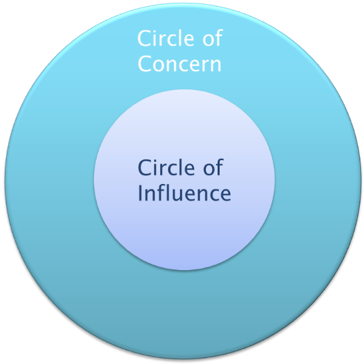
Circle of Influence and Circle of Concern
This model is adapted from Stephen Covey’s book ‘The Seven Habits of Highly Effective People’. It is a really helpful technique to use to support your mentee in determining what they still have control over and can influence during turbulent times.
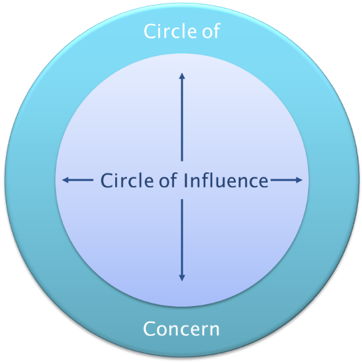
In mentoring, the outer circle represents the mentee’s concerns. The mentor encourages them to record everything that they are worried about or feel they need to manage, from major issues created by the crisis to quite minor but continuous irritations.
The inner circle represents what they can influence, either directly or indirectly. The mentor can ask questions to discuss the content of the circle of influence such as:
- What specifically can you do to concentrate on those concerns you can influence?
- What can you do to extend your circle of influence?
And for the circle of concern:
- How can you stop worrying about those things that you can’t influence?
If the mentee then focuses their energy on the areas that are within their circle of influence and control, they will increase their capacity for influence: the more influence they effectively exercise, the more influence they will have. If the mentee purely focuses on the circle of influence for a few weeks they will find that many of their concerns disappear as they are rewiring their brains to think and focus on those areas they can have influence or control over and ignoring areas that they don’t have influence or control over.
It is a great technique for empowering mentees during turbulent times as it helps them to feel more in control of their lives.
Using mindfulness techniques in mentoring to calm fear
A mentor can practise mindfulness techniques to:
- Improve their own self-care and resilience
- Be more grounded and connected in life
- Have greater presence, be more attuned and have resonance with others
- Be more creative, intuitive and open to possibilities
- Be less judgmental
- And to have more compassion – to themselves and others.
Bridges’ Transition Model
William Bridges’ Model of Managing Transitions can be a powerful model in supporting your mentee through the phases of transition in any period of turbulence they are experiencing.
Use this model to help your mentee to understand which stage of transition they are currently in and that how they are feeling is quite normal in a crisis. It also provides you with a framework to reflect on the type of support your mentee requires at this time.
The main strength of the model is that it focuses on transition, not change. The difference between these is subtle but important. Change is something that happens to people, even if they don’t agree with it. Transition, on the other hand, is internal: it’s what happens in people’s minds as they go through change. Change can happen very quickly, while transition usually occurs more slowly.
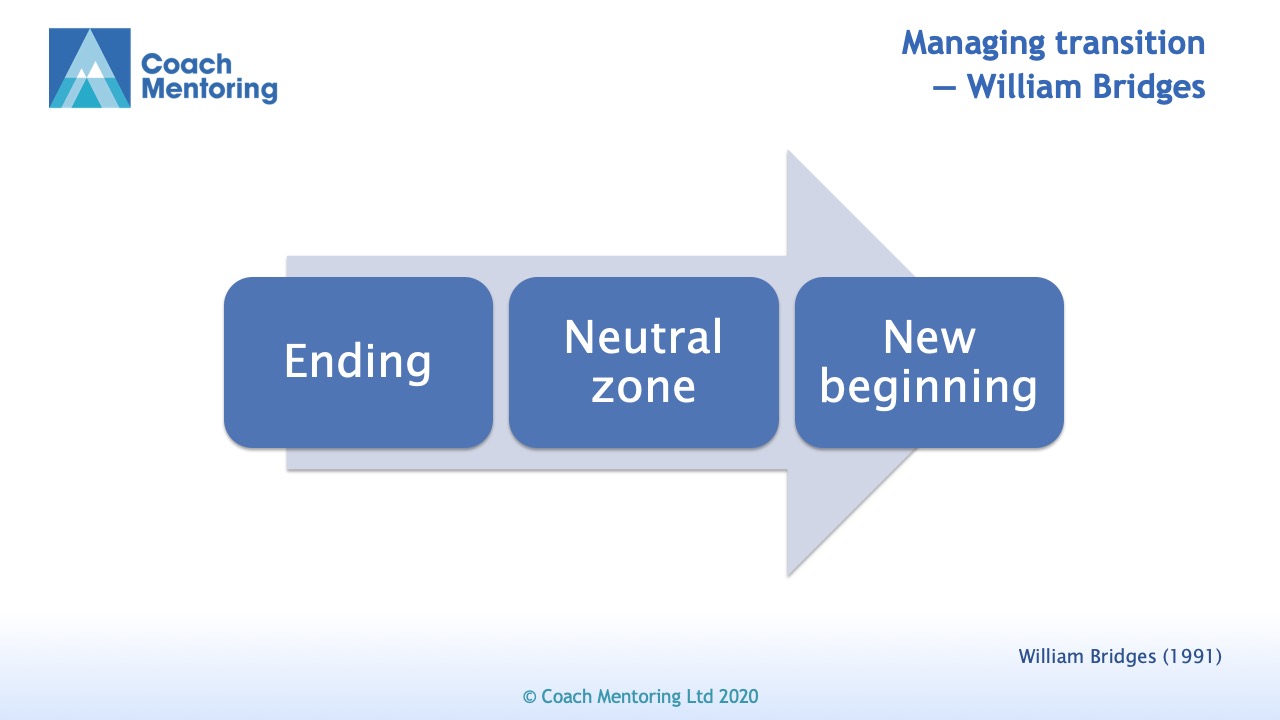
The model highlights three stages of transition that people go through when they experience change. These are:
- Ending, Losing, and Letting Go
- The Neutral Zone
- The New Beginning
Bridges says that people will go through each stage at their own pace. For example, those who are comfortable with the change will likely move ahead to stage three quickly, while others will spend longer at stages one or two.
Stage 1: Ending, Losing, and Letting Go
People enter this initial stage of transition when facing a crisis or a big change, imposed or also when participating in a change process. This stage is often marked with resistance and emotional upheaval, because people are being forced to let go of something that they are comfortable with.
People have to accept that something is ending before they can begin to accept a new way of being, working and/or living.
Mentoring Through Stage One
It’s important to accept and understand people’s resistance and emotions. They will need time to accept the changes and let go, and get them to talk about what they’re feeling. In these conversations, make sure that you listen empathically.
Stage 2: The Neutral Zone
In this stage, people affected by the crisis are often confused, uncertain, and impatient. It is called the neutral zone because it is an in-between time when navigating a time of uncertainty in-between something ending and a new beginning.
Here, individuals might experience:
- Resentment towards the turbulence they are experiencing
- Low morale and maybe even depression
- Anxiety about their role, status, identity or job loss.
Mentoring through Stage Two
Despite these feelings, this stage can also be one of great creativity, innovation, and renewal. This is a great time to encourage people to try new ways of thinking or working.
Stage 3: The New Beginning
The last transition stage is a time of acceptance and energy. Individuals have begun to embrace new ways of being, working and living. They’re building the behaviours and skills they need to work successfully post the crisis or when things settle down in their lives.
At this stage, people are likely to experience higher energy levels and openness to learning, i.e. bring new things to a “new normality”.
Mentoring People Through Stage Three
As individuals begin to accept change and new ways of working and living differently, it’s essential that as a mentor you help them sustain it. Encouragement and support are essential at this stage.
There are fuller explanations of these techniques and others.
It article is part of Mentoring in times of turbulence which contains tangible tools, techniques, resources and support.
Download a PDF of this content, or use the Print this page in the footer.


Leave a Reply
Want to join the discussion?Feel free to contribute!